 Auralis Atelier
A manufacturing brief is most useful when it explains what must be true of the finished piece, not only what it should look like. For a sweater, cardigan, scarf or knit set, the yarn, gauge, stitch structure, fit and finishing all work together. Start with the detail you have; this checklist shows what to add as the brief develops.
1. Define the product and its role in the collection
Name the product category and explain how the piece will be worn. A fine-gauge layering knit, a textured statement cardigan and a scarf all ask different things of yarn, construction and finishing. Include the intended customer, season, target retail level and the one or two details that cannot be compromised.
2. Share visual and construction references
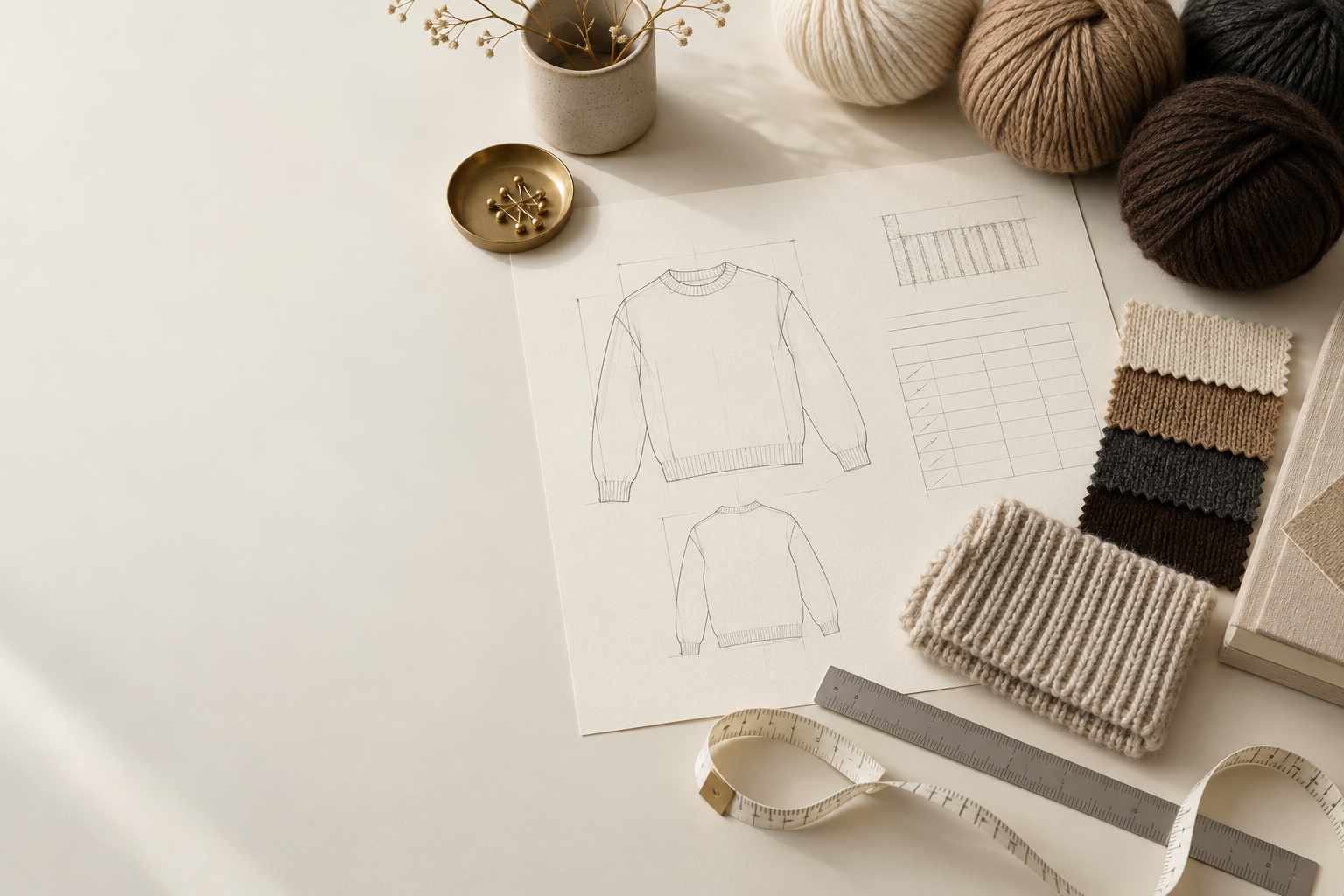
A sketch, inspiration image or reference garment can communicate silhouette quickly. Add notes to show what you are responding to: proportion, collar shape, texture, openness of stitch, trim, placement or finish. A reference is a starting point, not a specification, so call out what should be interpreted rather than copied.
3. Describe the material direction
If you have a fibre preference, list it alongside the desired hand-feel: soft, dry, compact, airy, fluid or structured. If material is still open, state the season, intended weight and price architecture. This gives the yarn conversation a purpose and helps connect material choice with the finished garment.
4. Add key measurements and size information
Include a size chart when one exists. If it does not, identify the base size, intended fit and essential points of measure such as body length, chest, shoulder, sleeve and neckline. For a relaxed or oversized style, say so clearly; the expected silhouette is as important as the numeric dimensions.
5. Clarify quantities, colours and timing when known
Early estimates are useful even when they may change. State the expected number of styles, colourways and quantity range, plus any collection or launch deadline. If those details are still in progress, explain what is decided and what remains open. It helps the feasibility conversation begin at the right level.
6. Make the first question specific
End the brief with the decision you need help making. You may want to compare yarn directions, assess whether a stitch is buildable, understand what a first sample should prove or plan the route from a reference into a production-ready specification. A precise question creates a more productive first exchange.
Frequently asked questions
Can I start without a finished tech pack?
Yes. A sketch, reference garment or moodboard can begin a feasibility discussion. More technical detail is developed as the product moves toward sampling and bulk approval.
What should I include in a first knitwear brief?
Share what you know about the product category, silhouette, material direction, intended customer, size range, quantities, timing and any references. It is fine to flag the areas where you need development support.
Why does knitwear need construction detail?
Gauge, stitch structure, yarn, finishing and measurements all affect the final garment. Identifying the essential details early makes sampling more useful and helps protect the intended design direction.
Ready to turn your reference into a manufacturing brief?
Share your tech pack, sample, sketch or moodboard for a development-led feasibility conversation.
Send your brief